Revolutionising Underground Mining Safety
The World’s First Single-Operator Wireless Blasting System
Led the 18-month UX design of Orica’s LOADPlus software for the Avatel™ robotic blast rig. By defining a first-of-its-kind operator persona and mapping complex underground workflows, I designed a system that moved miners from the blast face to the safety of a cab. Now in global production.
Date
Client
Orica
Skills
UX Design
UI Design
Research
Wireframing
Prototyping
Personas
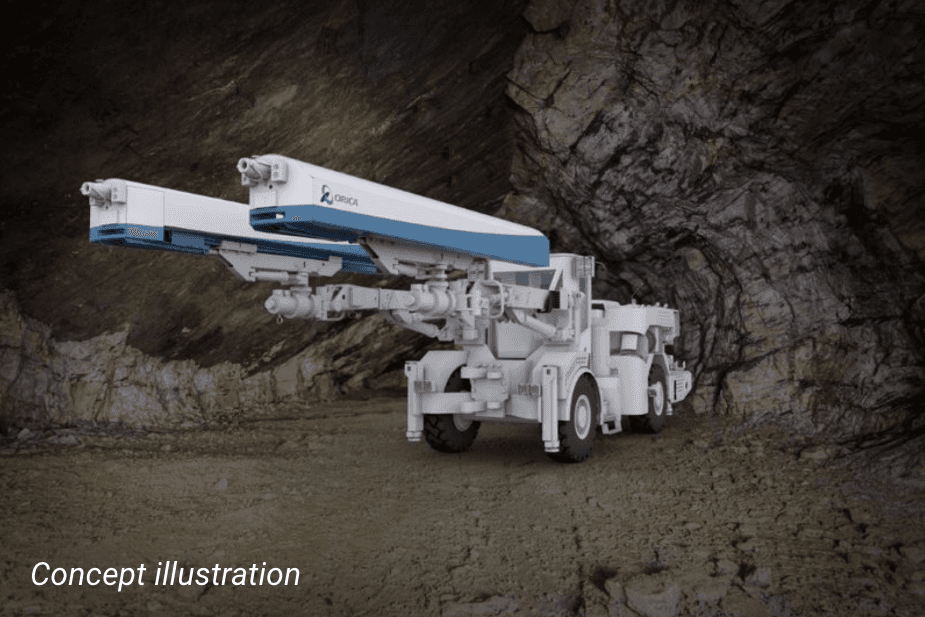
The Challenge
Underground development blasting is arguably the most hazardous task in mining. Historically, operators had to manually load explosives at the "face" (the end of the tunnel), exposed to falling debris, toxic gases, and seismic activity.
The Mission: How do we design an interface that enables a single operator to manage the entire explosive loading cycle, safely and confidently, from the protected cab of a drill rig?
Personas
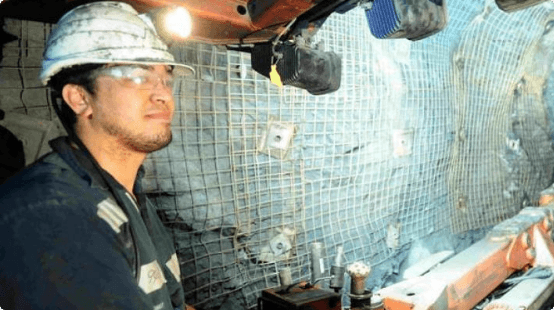
Early research revealed a critical insight: the intended user didn't exist yet. The Avatel rig demanded a new type of worker—a hybrid of a Jumbo Drill Operator and a Blast Loader. These users were physically oriented, used to tactile controls, and naturally skeptical of screen-based automation for high-stakes tasks.
Core User Requirements:
Tactile Trust: Transitioning from manual "hands-on" loading to digital "eyes-on" monitoring.
Multi-Tasking: Operating drill arms while managing bulk emulsion products and wireless detonators.
Harsh Environment: Operating via touchscreens while wearing gloves in a high-vibration, dusty environment.
Research Strategy: Mapping the Unknown

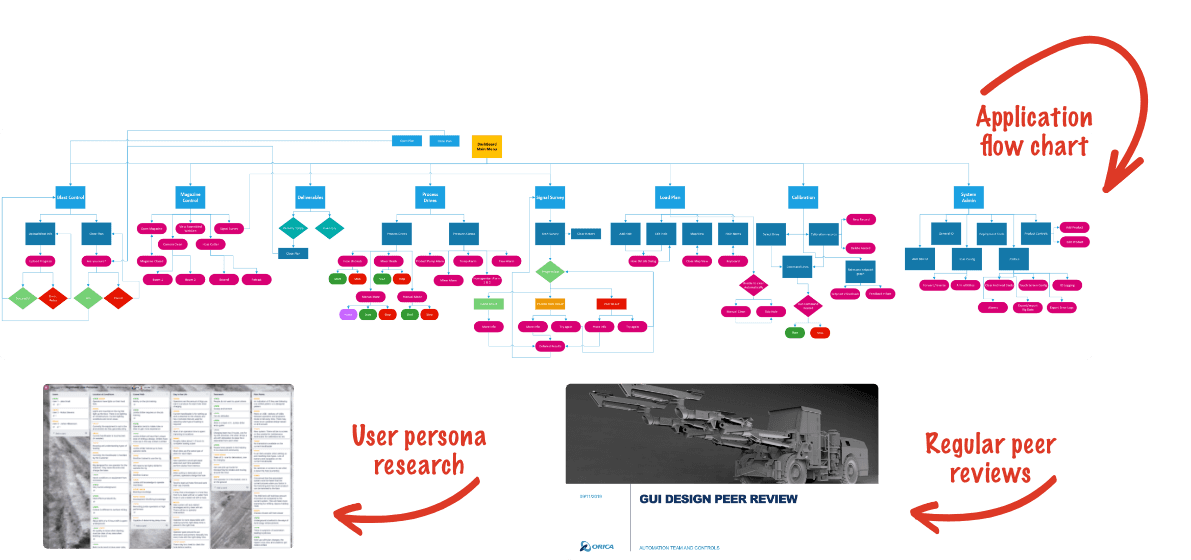
Because the domain was so technical, I moved away from "assumed" profiles and built a research framework based on boots-on-the-ground reality:
Expert Interviews: Mapped current manual procedures to identify emotional and physical pain points.
Persona Birth: Built a ground-up profile of the "Hybrid Operator."
Journey Mapping: Documented the full cycle from tramming the rig to post-blast reporting.
The Feedback Loop: Established a "non-negotiable" peer-review cycle with operators. Their gut-level reactions to icon shapes and color states saved months of development rework.
The Design Problem: One Cab, Two Systems
The software (LOADPlus) had to live alongside the Epiroc rig operating system. The risk of "mode confusion"—an operator forgetting which system or arm they were controlling—was a primary safety concern.
Design Solutions:
Spatial Metaphor: 2D representations of the rig helped operators orient arm positions instantly.
Visual Priority: Universal color coding ensured alarm states were impossible to miss, even with glare and dust.
Rugged UI: High-contrast layouts and oversized touch targets designed for gloved use and cab vibrations.
Sequential Logic: Clear progress indicators for explosive loading to prevent partial (and dangerous) completion.
Prototyping & Technical Validation
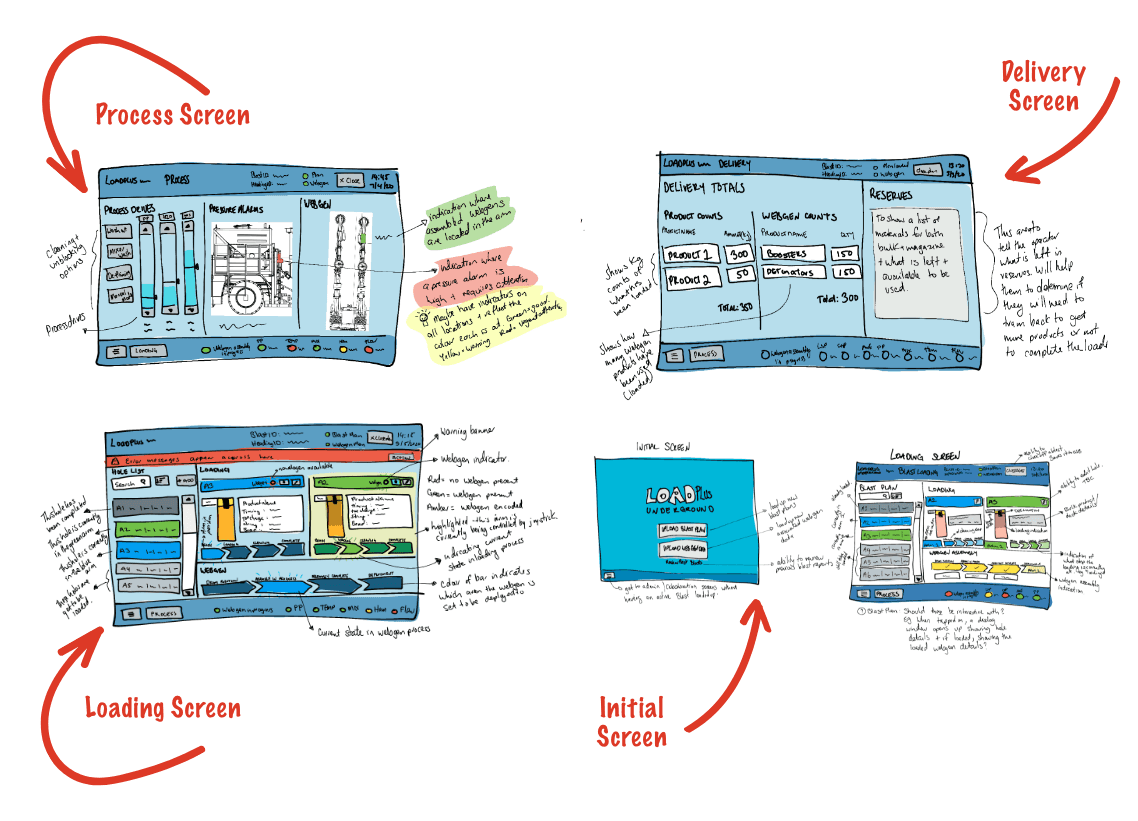
I developed a high-fidelity prototype in Adobe XD that functioned as a "living" spec. This served three crucial roles:
Usability: Operators flagged "mental model" breaks between the LOADPlus and Epiroc systems.
Development Guide: Provided exportable components for implementation in LabVIEW (the final runtime environment).
Stakeholder Alignment: Provided a concrete artifact to secure buy-in before the heavy engineering phase.
The Outcome: Global Production
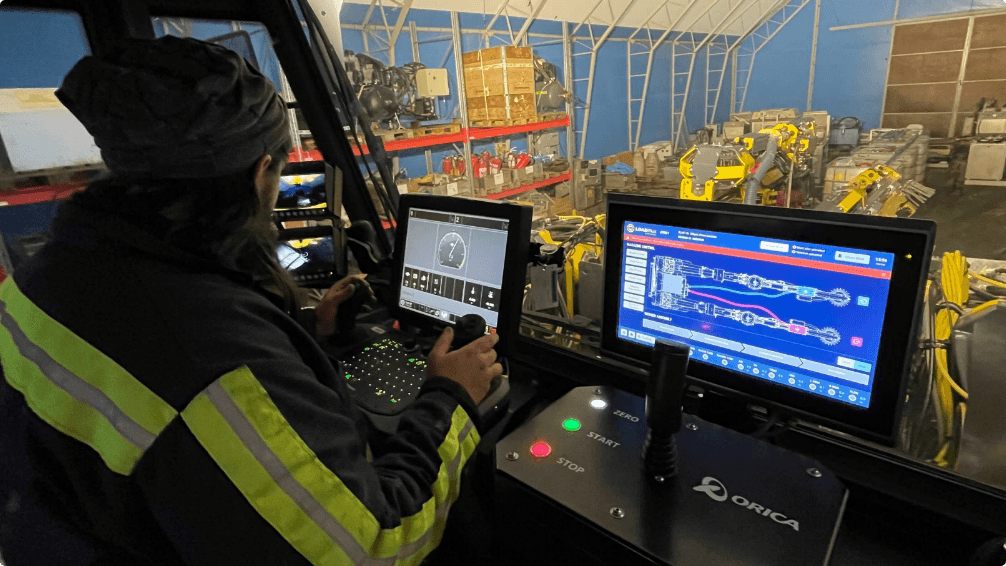
The final Avatel system successfully integrated LOADPlus software with WebGen™ wireless technology. It effectively removed operators from the blast face, making development blasting a cab-based, mechanized process for the first time.
"The Avatel GUI is an easy and intuitive design... The operator has all the necessary information easily displayed for charging a development face... This system allows our operators to work from inside the ROPS/FOPS and stay out of a dangerous area." - Project Manager, Avatel Program
Key UX Takeaways
Research Invalidation is a Win: Proving our initial persona assumptions wrong early prevented a catastrophic design failure.
Visuals Over Copy: In high-stress, dual-system interfaces, color and iconography do the heavy lifting. Operators don't "read"—they "recognize."
The "Expert" Gap: The gap between a Project Manager’s logic and an Operator’s intuition is vast. Constant iterative testing is the only bridge.
Hardware is the Context: UX doesn't end at the screen; it must account for gloves, vibration, and the physical constraints of the machine.
More Projects
Recent projects in web design and digital products